

Hair loss in dogs and cats comes from two very different places: hormonal (endocrine) diseases like low thyroid or Cushing’s, and skin (dermatologic) problems like allergies, parasites, or infection. Endocrine hair loss tends to be symmetrical and non-itchy, with thinning across the flanks or tail base and a coat that just is not growing back. Dermatologic hair loss usually comes with scratching, redness, scabs, or a smell, and the pattern often follows where the pet is chewing or licking. Sorting the two starts with the pattern on the skin and the story of how it began, and the treatment paths for each are completely different.
Family-owned and rooted in Providence for four decades, Carolina-Virginia Animal Hospital works up hair loss with an in-house physical exam, bloodwork, cytology, and imaging for dogs and cats to check thyroid values and screen for the endocrine or skin diseases behind thinning coats. We take the time to walk your family through what the pattern on your pet’s skin is telling us and what the next step looks like. If your dog or cat is losing coat in patches or thinning along the sides, reach out to us and we will take a careful look.
The Short Version for Busy Pet Families
- Hormonal hair loss is usually symmetrical and non-itchy, while skin-related hair loss almost always comes with scratching, redness, scabs, or odor.
- Allergies, parasites, and infections are the most common dermatologic causes, and year-round parasite prevention removes one of the biggest triggers entirely.
- Thyroid disease, Cushing’s, and sex-hormone imbalances often show up on blood work before the thinning becomes obvious, which is why routine testing matters.
- Most cases of hair loss improve significantly once the underlying cause is identified, and the right first step is a hands-on exam that maps the pattern on your pet’s skin.
When Does Hair Loss Cross the Line From Normal to Worth a Visit?
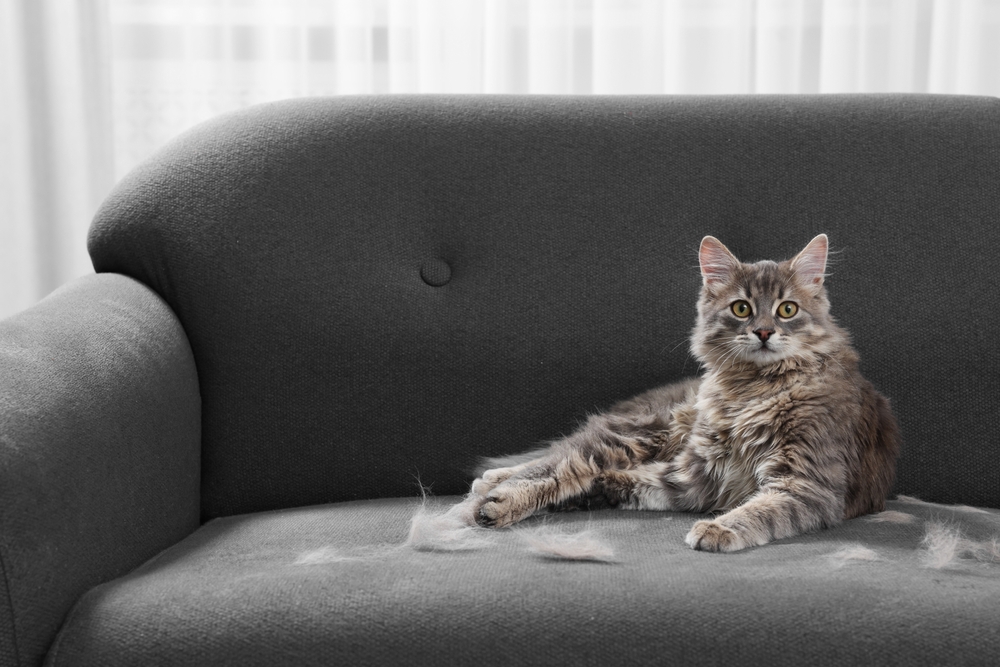
Hair loss crosses from normal to worth a visit when you can see it: thin spots, bald patches, or skin showing through the coat. Normal shedding, like a dog blowing their coat every spring or a cat leaving a fresh layer of fur on the couch, does not leave bare or visibly thin skin behind.
Alopecia is the medical word for hair loss, and it is a symptom pointing to something else rather than a disease on its own. The goal is never to treat the bald spot itself; it is to find what is driving it.
A few patterns are worth an appointment rather than a wait-and-see:
- Barbering: hair that looks bitten or broken off short, usually from a pet licking or chewing the same area.
- Patchy or localized thinning: bald spots that show up outside the usual seasonal shed, especially if they are growing.
- Red or scaly skin: any redness, flaking, crusting, or a change in skin color under the thinning coat.
- Hair that will not regrow: an area that stays bare weeks after the original irritation seems to have settled.
- Focused scratching or licking: repetitive attention to one spot, one flank, or one paw.
Because skin and coat quality say so much about what is happening underneath, a coat check is part of every full physical exam we do. Sometimes a thinning coat is the first clue to something a family had not noticed yet.
Are Allergies the Reason My Dog or Cat Is Losing Fur?
Allergies are one of the most frequent culprits we see. Allergies make the immune system overreact to a trigger, and the scratching and licking that follow are what wear the coat down into bald spots. The hair loss is a side effect of the itch, not the allergy itself.
Three broad trigger categories cover most allergic pets:
- Environmental: pollen, dust, and mold set off atopic dermatitis, an itchy inflammatory reaction that flares seasonally in many dogs.
- Food: food allergies usually trace back to a specific protein in the bowl, which is why pinning them down often takes an elimination diet rather than a single test.
- Fleas: in a mild climate like ours, where fleas never fully die off, flea allergy dermatitis can flare from a single bite and is one of the most common skin problems we see in cats.
Dogs and cats wear their allergies differently. Dogs tend to chew at their paws, belly, and armpits and rub their faces raw, while cats are quieter about it, showing up with tiny scabs, overgrooming, or bald strips you might not catch until the fur is already gone.
Managing an allergic pet is usually a long game: medicated baths calm inflamed skin, omega-3 supplements support the skin barrier, and anti-itch medications break the scratch cycle so the coat can recover. Food-driven cases often need an elimination diet, and stubborn environmental cases sometimes call for formal allergy testing. If your pet is caught in a recurring cycle of itch and hair loss, schedule an allergy workup so we can get ahead of the next flare.
Which Tiny Pests and Infections Strip a Pet’s Coat?
Even strictly indoor pets can pick up parasites, and some of the worst offenders are too small to see without a microscope. Several of them look similar from across the room, which is exactly why a skin sample under the lens beats a guess. The usual suspects:
- Demodex mites: these live down in the hair follicles and can overgrow when the immune system is young or stressed, causing patchy, often non-itchy bald spots.
- Sarcoptic mange: intensely itchy and contagious, it tends to hit the ears, elbows, and belly first.
- Fleas: they bite, feed, and multiply fast, and the scratching they set off is a direct route to hair loss even when you never spot an adult flea.
- Ringworm: not a worm at all but a fungus, it leaves circular bald patches and spreads readily to other pets and to people in the household.
Year-round parasite prevention closes the door on the biggest category, since a single hitchhiking flea can start the itch-and-scratch cycle even in indoor pets. Bacterial and yeast infections tend to move in as a second wave, overgrowing on skin that is already inflamed and adding their own crusting, odor, and hair loss. Sorting all of this out starts in the lab, and our team runs skin scrapings, cytology, and fungal cultures to identify exactly what is on the skin before we treat it.
Symmetrical, Even Thinning: Is a Hormone Problem Behind It?
When hair thins evenly along both sides of the body and the pet is barely scratching at all, hormones are often the reason. Endocrine hair loss is sneaky because it develops so gradually that families do not notice until a once-full coat has quietly thinned across the flanks, tail base, or trunk. The good news is these conditions usually leave fingerprints on a blood test.
How Do Thyroid and Adrenal Diseases Affect the Coat?
The two big endocrine players in dogs are the thyroid and the adrenal glands. When a dog is producing too little thyroid hormone, hypothyroidism thins the coat symmetrically while weight creeps up and energy drops off. On the other end sits Cushing’s disease, where too much cortisol brings a pot-bellied look, increased thirst and appetite, and a thinning coat that often spares the head and legs. Cats have their own version: an overactive thyroid, or hyperthyroidism, which can leave the coat patchy and unkempt alongside weight loss, a big appetite, and restlessness.
Can Sex Hormones or Household Medications Cause Hair Loss?
They can, and this is one people rarely see coming. Intact male dogs can develop symmetrical hair loss when a testicular tumor starts producing excess estrogen, and intact females can show similar coat changes tied to their hormonal cycles; spaying or neutering often resolves the problem once the hormone source is removed. There is also a secondhand route: pets can absorb hormones from a family member’s hormone replacement creams by snuggling against treated skin or licking the spot where the gel was applied. If someone in the home uses a topical estrogen or testosterone product, mention it at the visit, because it can genuinely change what we look for.
Why Does Routine Blood Work Matter for Coat Health?
Hormone imbalances tend to show up on lab work before they show up in the mirror. A thyroid value can drift low or a cortisol level can climb while the coat still looks mostly normal, which is a real argument for routine blood work at wellness visits: a baseline drawn while your pet is healthy makes it far easier to spot a meaningful change later. When thinning does appear, we already have numbers to compare it against.
Is Your Pet Grooming Itself Bald From Stress or Pain?
This is one of the most overlooked causes of hair loss, especially in cats. When the skin underneath looks perfectly healthy but the fur is thin or missing, the driver is often behavioral or painful rather than dermatologic. The trouble is that stress-driven and pain-driven grooming can look identical, which is exactly why we lean on diagnostics instead of assumptions.
Cats under stress can groom themselves bald in tidy strips along the belly or legs, a pattern called psychogenic alopecia. A new pet, a move, or other life stressors can rattle a sensitive cat enough to set it off. Dogs do a version of this too, licking one spot on a leg over and over until they create a raw, thickened lick granuloma.
Pain is the other half of the story, and it hides well. A cat with idiopathic cystitis may overgroom the belly right over a painful bladder. A dog or cat with osteoarthritis may lick and pull the hair over a sore joint even though the skin there looks fine. Because a bald belly can mean anxiety or a hurting bladder underneath, guessing is risky. If you suspect stress or pain is behind the grooming, come in for an evaluation so we can look for a physical cause before assuming it is purely behavioral.
Was Your Pet Simply Born to Lose Some Hair?
Some dogs inherit coat conditions that cannot be cured but can absolutely be managed for a comfortable, good-looking life. Knowing your breed’s tendencies keeps you from chasing a cause that was written into the genes from the start. These conditions are usually a diagnosis of exclusion, meaning we rule out the treatable causes first.
| Condition | Typical presentation | Breed tendency |
|---|---|---|
| Color dilution alopecia | Thin, brittle hair in lightened coat areas | Blue and fawn coats (Dobermans, Silver Labs, some terriers) |
| Seasonal flank alopecia | Symmetrical bald patches on the flanks that come and go with seasons | Boxers, Bulldogs, Airedales |
| Sebaceous adenitis | Dry, flaky skin with dull, brittle coat and hair loss | Standard Poodles, Akitas |
| Zinc-responsive dermatosis | Crusting and hair loss around the face and pressure points | Huskies, Malamutes |
Management for the whole group tends to look similar: supportive skin care, targeted nutrition, and sometimes light therapy to encourage regrowth. The aim is a comfortable pet with the healthiest coat their genetics allow, not a cure that was never on the table.
What Your Pet Eats and How Their Coat Shows It
Skin and coat are among the very first places a nutritional shortfall shows up, because growing hair is metabolically demanding and needs a steady supply of protein, fatty acids, zinc, and biotin. A dependable dose of omega fatty acids keeps the skin barrier intact and the coat glossy, so a diet short on them often shows up first as dull, flaky fur.
Most complete, balanced commercial diets cover these bases well, and coat problems from outright deficiency are uncommon in pets eating a quality food. Homemade diets, very restrictive elimination trials, or budget foods are where gaps tend to creep in.
Could Too Many Baths or the Wrong Shampoo Be the Problem?
Bath habits can work against the coat. Over-bathing or reaching for a harsh, human-grade shampoo strips the natural oils that keep skin supple and hair flexible, leaving the coat dry, fragile, and more prone to breakage. It is a common misstep, and it usually happens when families are trying their best to help.
On the flip side, regular grooming with an appropriate brush improves circulation, clears out loose hair and debris, and spreads natural oils along the shaft for a healthier, shinier coat. If you are not sure how often to bathe your pet or which products suit their skin, we are glad to walk you through a bathing routine matched to your dog or cat’s coat type and any skin conditions in play.
Step by Step: What a Hair Loss Workup Looks Like
A hair loss workup is a step-by-step process of narrowing down the cause, not a single test, and knowing the sequence takes a lot of the worry out of the visit. We start with the story and the skin, then reach for the tools that fit the pattern in front of us. Here is the path a typical workup follows:
- A detailed history: when the thinning started, whether there is itch, diet, home changes, and any medications in the household.
- Physical exam and pattern mapping: is the loss symmetrical or patchy, itchy or quiet, focused on one spot or spread out?
- In-house testing: skin scrapings and cytology to check for mites, bacteria, and yeast right away.
- Fungal culture: when the pattern suggests ringworm, a culture confirms or rules out the fungus.
- Blood work and endocrine panels: thyroid and adrenal testing when symmetrical, non-itchy thinning points toward hormones.
- Allergy evaluation: elimination diets, blood testing, or referral for formal testing when allergies are the leading suspect.
Having an in-house lab that turns results around quickly means we can often run the first-line skin tests and basic blood work without a long wait, which keeps the workup moving and gets your pet on the right treatment sooner.
Pinpointing the Cause Shapes the Treatment Plan
Treatment is always matched to the specific diagnosis rather than aimed at the bald spot itself, because so many different conditions cause alopecia. Once we know what is driving the loss, we map out the best treatment plan for your pet based on the diagnosis and a conversation with you about their needs, temperament, and home situation.
| Cause | Typical treatment approach |
|---|---|
| Allergies | Anti-itch medication, medicated baths, omega-3 support, elimination diet or allergy management |
| Parasites | Targeted antiparasitic treatment plus year-round prevention |
| Infections | Antibiotics or antifungals, often with medicated shampoos |
| Hormonal disease | Thyroid supplementation, cortisol-lowering medication, or spay/neuter for sex-hormone cases |
| Stress or pain grooming | Address the underlying stressor or pain, sometimes with environmental changes or pain control |
| Nutritional gaps | Diet adjustment and targeted supplementation |
Follow-up rechecks are where we confirm the coat is genuinely regrowing, fine-tune doses, and catch any secondary infection early before it undoes progress. If your pet’s hair loss is tied to a painful joint or sore area, our treatment options for pain and inflammation become part of the plan too, since easing the discomfort often quiets the overgrooming that comes with it.
Pet Hair Loss: The Questions Families Ask Us Most
Will my pet’s hair grow back after treatment?
In most cases, yes. Once the underlying cause is treated, the coat usually regrows over a matter of weeks to a few months, depending on the pet’s hair growth cycle and how long the problem was going on. Some inherited breed conditions may not fully reverse, but even those often improve with supportive care. Regrowth is one of the main things we check at follow-up visits.
Is my pet’s hair loss contagious to my family?
Most causes are not, but a few are. Ringworm is a fungal infection that spreads to people and other pets, and sarcoptic mange can cause a temporary itchy rash on humans. Allergies, hormonal disease, and stress grooming are not contagious at all. Because you cannot tell them apart by looking, it is worth getting a diagnosis, especially if anyone in the home develops an unexplained itchy rash.
My pet is losing hair but does not seem itchy. Should I still worry?
Non-itchy hair loss is actually a meaningful clue, so it is worth an appointment. Symmetrical thinning without scratching often points toward a hormonal cause like thyroid disease or Cushing’s, which develop gradually and are easy to miss early. These conditions are very manageable once identified, and catching them sooner usually makes treatment simpler.
Let’s Find the Answer and Restore That Coat
Whether your dog is scratching, your cat is quietly overgrooming, or you are watching a symmetrical thinning spread along the flanks, there is almost always a clear path forward once we know the cause. The vast majority of hair loss cases improve significantly with the right diagnosis and a treatment plan built around your specific pet.
Our team takes the time to work through the pattern, run the right diagnostics, and put together a plan that fits your family. If you have noticed any coat changes, get in touch with our team and we will help you figure out what is going on and what comes next.