
After 40 years of caring for the same families in Providence, watching puppies grow up and seeing parents bring in their kids’ first pets, you learn what actually gets done at home and what doesn’t. Elaborate dental routines that require restraining an unwilling cat or wrestling a toothbrush into a 90-pound dog rarely survive contact with real life. What works is simpler, more consistent, and tailored to the individual pet: the right product for the personality, a technique that takes 90 seconds rather than ten, and a genuine understanding of why it matters.
Carolina-Virginia Animal Hospital brings that same relationship-first approach to dental health that we bring to everything else. Our dental care services handle the professional component, and our team is genuinely happy to spend time during a visit talking through home care approaches that fit your specific pet and your specific life. Schedule a dental consult and we’ll help you build something that’s actually doable.
Why Does Home Dental Care Genuinely Matter?
By age three, roughly 70 to 80 percent of pets already show signs of periodontal disease. What starts as a soft layer of bacteria called plaque hardens into tartar within days. That tartar irritates the gum tissue, leading to gingivitis, and if nothing changes, the inflammation works its way deeper into the structures that support the teeth. By the time it’s visibly advanced, real damage has been done.
The consequences extend well past the mouth. Bacteria from advanced periodontal disease enter the bloodstream and have been linked to changes in the heart, kidneys, and liver over time. That’s why dental disease isn’t just a cosmetic problem or a bad-breath nuisance. It’s a chronic condition that affects whole-body health.
Home care doesn’t replace professional dental cleanings under anesthesia, but it dramatically extends what those cleanings accomplish. A professional cleaning resets the slate. Daily home care protects that fresh start. Without home care, the protection erodes within weeks; with it, you can stretch the benefit for many months. Both pieces matter, and they work best together. Our wellness and preventative care visits include dental evaluation as a routine part of every appointment.
Toothbrushing: The Most Effective Method
Why Brushing Stands Above the Rest
There’s a reason brushing remains the gold standard. Mechanical disruption physically breaks up the bacterial biofilm before it has time to mineralize into tartar. The bristles reach the spots where plaque concentrates: along the gumline, between teeth, and on the back surfaces that other methods miss. No additive, gel, or chew matches that direct, mechanical action.
Daily brushing offers the strongest protection, but doing it three or four times a week still produces meaningful results. The mistake people make is aiming for perfection and quitting when life gets busy. A short, consistent routine that fits realistically into your week is genuinely better than an ambitious plan that lasts two weeks and falls apart.
How Do You Build the Brushing Habit Without a Battle?
Most pets resist brushing not because they hate it but because the first attempt was rushed or overwhelming. Cooperative care techniques let your pet feel like a participant rather than a patient. A workable progression:
- Touch the muzzle. Spend a few days simply touching your pet’s mouth and lifting their lips, rewarding each calm response with a treat or praise.
- Add finger contact. Run a finger along the outer teeth and gumline, building tolerance for that sensation without anything in your hand yet.
- Introduce toothpaste. Put pet-safe toothpaste on your fingertip. Most pets enjoy the flavor, and licking it off is a great early win.
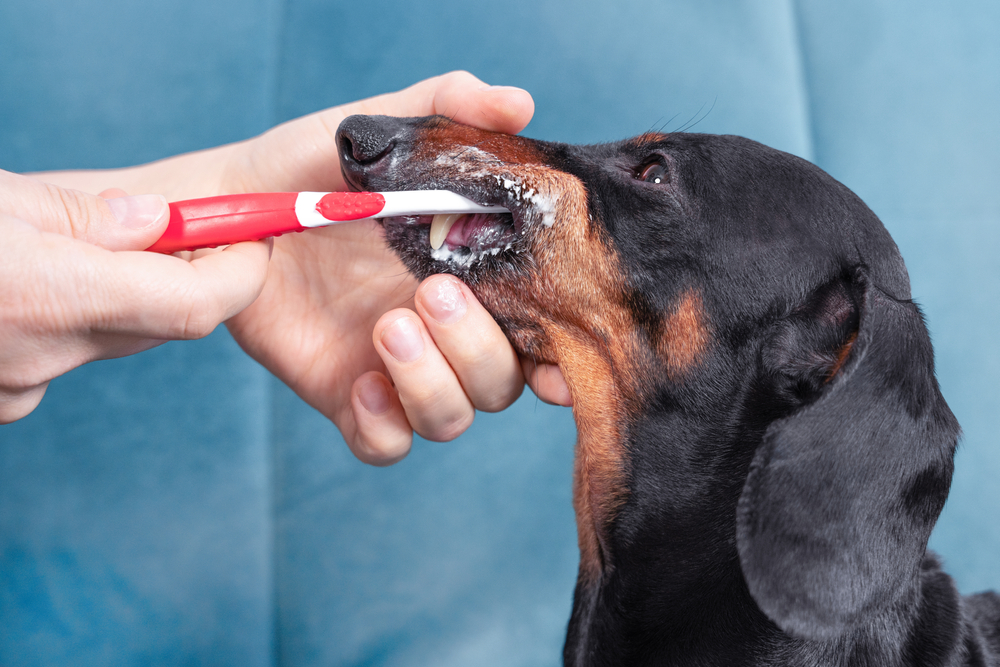
- Move to a brush. Try a finger brush or a soft-bristled toothbrush, starting with just the front teeth.
- Extend backward. Gradually work toward the molars over the following days or weeks.
For brushing dog teeth, hold the brush at a 45-degree angle to the gumline and use small circular motions. Focus on the upper back teeth, where tartar accumulates fastest. For brushing cat teeth, smaller is better: smaller brush, lighter pressure, shorter sessions. Cats often tolerate brushing best when they feel stable and unrestrained, like sitting on a lap or in their favorite spot.
A few rules that aren’t optional: never use human toothpaste (both fluoride and xylitol are toxic to pets), stop while the experience is still positive even if you only got a few teeth, and back up a step if your pet pulls away or shows real stress.
Our online pharmacy carries toothpaste and toothbrushes including CET fingerbrushes with sample toothpaste, a great starting point for first-time brushers. If you’d like a hands-on demonstration, ask us at your next visit and we’ll walk through technique with your specific pet.
Dental Wipes: A Real Alternative
Some pets simply will not accept a toothbrush, no matter how patiently you introduce it. For those pets, dental wipes or gauze wrapped around a finger provide friction-based plaque removal that’s substantially better than skipping home care altogether.
Wipes work especially well for cats, anxious dogs, and seniors who don’t tolerate prolonged handling. Wrap the wipe around your index finger and rub gently along the outer surface of the teeth and gumline, focusing on the canines and back molars. They don’t reach as deeply along the gumline as a brush, but used consistently they meaningfully slow plaque accumulation. For some pets, wipes are a stepping stone toward eventual brushing. For others, they remain the right long-term tool.
Dental wipes are an easy, low-pressure way to start.
Gels, Powders, Sprays, and Enzymatic Products
Enzymatic dental products take a different approach. Rather than scrubbing plaque off, they use enzyme systems (typically lactoperoxidase or glucose oxidase) to break down the bacterial biofilm chemically. Most are applied with a finger, sprayed into the mouth, sprinkled on food, or simply allowed to coat the teeth after your pet eats.
A realistic expectation: enzymatic products work best when paired with some form of mechanical removal. Used alone, they slow disease but don’t eliminate it. Used alongside brushing, wipes, or appropriate chewing, they meaningfully extend the benefit. For pets who refuse to let anything near their mouth, dental care powder sprinkled on food is often the easiest entry point.
Water Additives and Oral Rinses
Water additives are the most hands-off home care option you have. You add a measured amount to your pet’s drinking water, and antimicrobial or enzymatic ingredients work passively while they drink throughout the day. Effectiveness varies between products, so look for ones with proven results, and introduce them at half-strength initially to make sure your pet keeps drinking normally. They supplement, but don’t replace, mechanical cleaning.
Dental Diets
Dental diets work through both their structure and their ingredients. The kibble is shaped and sized so teeth must penetrate before it crumbles, producing mild abrasive cleaning with every bite. Some formulations also include ingredients that bind dietary calcium and reduce its availability for tartar mineralization. They’re particularly useful for pets whose home care tolerance is limited, and our pharmacy offers dog dental diets and cat dental diets when transitioning makes sense.
Dental Chews and Toys
Chewing action provides genuine plaque removal when the right product is selected. The wrong product creates a real risk of fractured teeth that often need extraction.
The thumbnail test is the simplest way to evaluate a chew: if you can’t dent it with your thumbnail, it’s too hard. Dangerous chew items include antlers, hooves, hard nylon products, ice cubes, and raw bones. We see fractured teeth from these products often enough that the rule is firm: hard chews are not worth the risk.
Safe chew toys flex slightly under pressure. Well-designed dental chew toys with textured surfaces that reach between teeth provide real cleaning, and edible chews like ProDen Dental Care Bites for cats, Greenies Dental Treats for cats, and edible dog dental chews and treats combine mechanical scrubbing with enzymatic action.
A few practical reminders:
- Match the chew to the size of your pet. Oversized chews are safer than ones your dog can swallow whole.
- Supervise initial sessions with any new product.
- Rotate options to keep your pet engaged.
What Does the VOHC Seal Actually Mean?
The dental care market is crowded with products making bold claims, and most people don’t have a reliable way to evaluate them objectively. The Veterinary Oral Health Council exists for exactly that reason. The VOHC is an independent organization that reviews clinical trial data on dental products, awarding its seal only to products that demonstrate measurable plaque or tartar reduction in controlled studies.
When you see a VOHC-accepted seal, you have evidence-based assurance that the product does what it claims. The absence of a seal doesn’t necessarily mean a product is ineffective, but the seal gives you a reliable shortcut when comparing options. Look for it on dental chews, water additives, diets, gels, and wipes. Our dog dental products and cat dental products selections give you vet-trusted options that match your pet’s preferences and tolerance.
What Home Care Cannot Address
Even meticulous home care has limits. Once tartar has hardened onto a tooth, no toothbrush, gel, or additive will remove it. And nothing applied above the gumline addresses what’s happening below it, where the most clinically significant disease occurs.
Anesthesia-free dentistry sounds appealing because it skips anesthesia, but it carries real risks beyond simply being incomplete. Without anesthesia, the only way to scrape tartar from teeth is to physically restrain a fully aware pet, which causes stress and can result in injury to the gums, tongue, or teeth. The procedure can only address the visible portion of the tooth, leaving the area beneath the gumline (where periodontal disease actually lives) untouched. Pets often look like they had a cleaning while the meaningful disease continues unchecked. Proper anesthetic dental cleanings allow full scaling above and below the gumline, dental radiographs to identify hidden problems, polishing to smooth the enamel, and treatment of any pathology found.
A complete dental visit at our practice includes pre-anesthetic exam and bloodwork through our in-house diagnostics, individualized anesthetic protocols, full monitoring throughout the procedure, and pain management afterward. How often your pet needs professional cleanings depends on the individual: smaller breeds often need annual cleanings due to crowding and rapid tartar formation, while larger breeds may go longer between cleanings if home care is consistent. We’ll give you a clear recommendation based on what we see in your pet’s mouth at every visit.
How Do You Build a Dental Routine That Sticks?
The home care plan that works is the one you can actually keep up with. A few practical strategies:
- Pair dental care with an existing daily habit. Tying it to evening meals or last thing before bed makes consistency much easier than trying to remember it as a separate task.
- Keep supplies visible. Toothbrushes hidden in a drawer rarely get used. Keep them where you’ll see them every day.
- Start with one technique, not five. Layering products too quickly often leads to abandoning the whole routine. Build one habit, then add to it.
- Adjust as you go. What works at month one may need to evolve at month six. Wipes might progress to brushing, or a stubborn pet might find their groove with water additives. Different is fine.
When you’re stuck or not sure what’s working, our team is happy to talk through it, demonstrate technique, and help you identify what’s likely to fit your pet’s personality.
Frequently Asked Questions About Pet Dental Home Care
How often should I brush my pet’s teeth?
Daily is ideal, but every other day is still meaningfully effective. Consistency beats frequency. A short session done most days protects more than an occasional long session.
My pet won’t tolerate anything in their mouth. Is there hope?
Yes. Start with the most tolerable option (often a water additive or dental powder on food), then work toward fingertip touch, then a wipe, then a finger brush, over weeks rather than days. The slower you go, the more it sticks.
Are dental treats enough on their own?
Treats and chews help, but they don’t reach the gumline where disease starts. Pair them with some form of mechanical or enzymatic care for best results.
When should I bring my pet in for a dental exam?
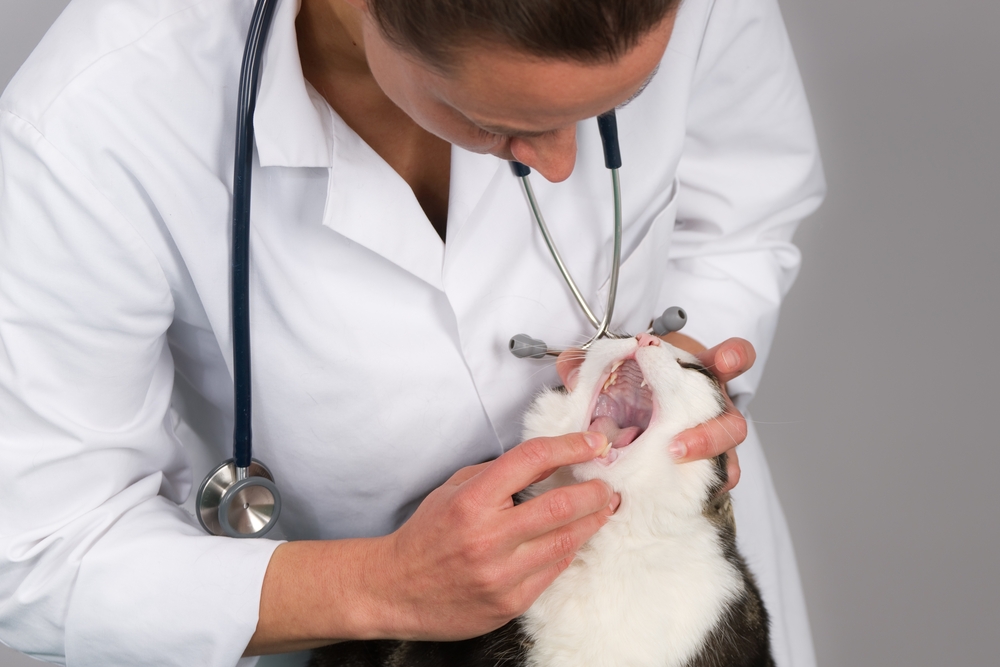
Bad breath, visible tartar, red or bleeding gums, dropping food, pawing at the mouth, or chewing on one side all warrant evaluation. Pets often hide oral pain extremely well, so don’t wait for obvious distress.
Partnering for Lifelong Dental Health
Dental health is one of the most overlooked contributors to whole-body wellness, and one of the easiest to genuinely improve with consistent attention. Daily or near-daily home care, paired with regular professional cleanings, gives your pet the best long-term outcome we can offer. The routine doesn’t have to be elaborate. It does have to be consistent.
When you’re ready to build a plan or schedule a dental exam to see where your pet stands, reach out to us. After 40 years in this community, we’ve helped a lot of families find an approach that actually works, and we’d love to do the same for yours.





Leave A Comment