

Few diagnoses are as frightening as being told your pet’s own immune system is destroying their blood cells. One day your dog or cat seems a little tired, and within days they are dangerously anemic or covered in unexplained bruises. Auto-immune blood diseases, including immune-mediated hemolytic anemia (IMHA) and immune-mediated thrombocytopenia (IMTP), progress quickly and demand fast, accurate diagnosis followed by aggressive treatment. The good news is that most pets respond well when these conditions are caught early and managed carefully.
At Carolina-Virginia Animal Hospital, we have been a cornerstone of this community for over 40 years, and we treat auto-immune blood disorders with the urgency and thoroughness they require. Our diagnostic capabilities allow us to evaluate blood counts, screen for tick-borne infections, and start treatment quickly. If your pet is showing signs of unusual fatigue, pale gums, or unexplained bruising, do not wait. Contact us to have them evaluated right away.
When the Immune System Becomes the Threat
The immune system’s purpose is protection. Anemia in the context of immune-mediated disease occurs when that system turns on healthy blood cells, destroying them faster than the body can replace them. Without adequate red blood cells to carry oxygen, every organ in the body is deprived, and the symptoms that follow can escalate from subtle to severe within days.
The immune attack occurs through different mechanisms. Some cases involve immune complexes that deposit in blood vessel walls and trigger inflammation. Others involve cytotoxic antibodies attaching directly to red blood cell surfaces and marking them for destruction. In either case, the immune system is treating the body’s own cells as foreign invaders, and the treatment has to stop that attack without leaving the body defenseless.
Understanding the two major forms, IMHA (targeting red blood cells) and IMTP (targeting platelets), helps explain why these conditions look so different and require their own approaches.
Immune-Mediated Hemolytic Anemia (IMHA)
Catching the Signs Before They Escalate
Immune-mediated hemolytic anemia occurs when antibodies attach to red blood cells and trigger their destruction by the body’s own defense systems. As red cell counts drop, the ability to deliver oxygen throughout the body fails progressively.
Signs to watch for:
- Unusual fatigue or reluctance to do activities your pet normally enjoys
- Faster breathing than normal, even at rest
- Pale or jaundiced gums (yellow coloration indicates bilirubin from destroyed red cells is accumulating in the body)
- Dark brownish or reddish urine from hemoglobin filtered through the kidneys
- Loss of appetite, often even for favorites
Certain breeds carry a higher breed predisposition to IMHA. American Cocker Spaniels, Irish Setters, and several other breeds develop this condition at higher rates. Families with these breeds benefit from knowing the early signs.
The Clotting Paradox
IMHA carries a serious secondary risk that catches many families off guard: while red blood cells are being destroyed, the clotting system simultaneously becomes dysregulated. This creates dangerous clot formation in the lungs, abdomen, or limbs. Blood clotting complications are among the most common causes of death in IMHA patients and are the reason hospitalization and close monitoring are so important in severe cases.
Signs of possible clot that need emergency attention:
- Sudden difficulty breathing
- A limb that is swollen, cold, or very painful
- Collapse or sudden severe weakness
Call us immediately or go to the closest veterinary ER if any of these signs appear. Do not wait for a scheduled appointment.
Immune-Mediated Thrombocytopenia (IMTP)
Where IMHA targets red blood cells, immune-mediated thrombocytopenia destroys platelets, the cell fragments responsible for forming clots at injury sites. Without adequate platelets, the blood cannot clot properly, and bleeding occurs with minimal provocation.
Signs of IMTP:
- Unexplained bruising, especially on the belly, inner thighs, or gums
- Tiny pinpoint red or purple spots (petechiae) on the skin or gums, most visible on the belly
- Nosebleeds without an obvious trigger
- Blood in the urine or stool
- Cuts or minor wounds that bleed disproportionately long
IMTP is particularly concerning because internal bleeding can occur without any external sign. A dog who appears to have a minor bruise may be hemorrhaging in a body cavity.
Evans Syndrome: When Both Hit at Once
Some pets develop simultaneous immune attacks on both red blood cells and platelets, a combination called Evans syndrome. Concurrent immune-mediated conditions require treatment that manages both components together, as addressing one without accounting for the other can worsen the overall picture. These cases require the most careful monitoring and the most nuanced treatment adjustment.
Our team has the clinical experience to manage these complex presentations and will work closely with you throughout the treatment process.
The Tick Connection: Why Infection Testing Matters Here
In Providence and the surrounding North Carolina piedmont region, tick exposure is a year-round reality rather than a seasonal concern. This matters directly for auto-immune blood diseases because several tick-borne infections can trigger or mimic immune-mediated blood cell destruction.
Tick-borne diseases that affect blood:
- Lyme disease: can trigger immune reactions affecting blood and joint health
- Rocky Mountain spotted fever: causes serious blood vessel and platelet damage, highly relevant in the Southeast
- Ehrlichia and Anaplasma: both target white blood cells and platelets; ehrlichiosis can be clinically indistinguishable from primary IMTP without testing
- IMHA secondary to Babesia: Babesia parasites invade red blood cells and provoke immune-mediated destruction simultaneously
This is why tick-borne disease testing is included routinely in our workup for suspected auto-immune blood disorders. Treating what looks like a primary auto-immune condition without ruling out an underlying infection can lead to incomplete treatment and relapse.
The Diagnostic Process
When a pet arrives with signs of a blood disorder, we move quickly.
- History and physical assessment: gum color, heart rate, breathing effort, any signs of bruising or bleeding, known tick exposure, recent medications
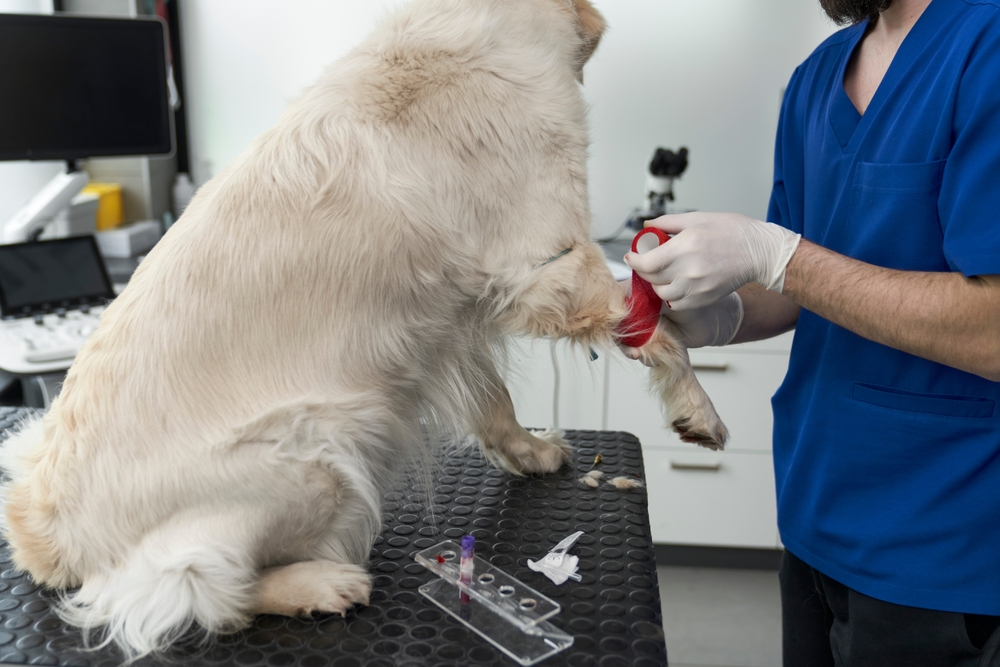
- Complete blood count and blood smear: quantifies red blood cells, white blood cells, and platelets; microscopic examination reveals signs of immune-mediated destruction such as agglutination (red cells clumping) and spherocytes (abnormally small red cells)
- Coombs test: detects antibodies directly attached to red blood cell surfaces, confirming immune-mediated destruction
- Reticulocyte count: measures whether the bone marrow is generating new red blood cells in response to the loss
- Chemistry panel: evaluates kidney and liver function to guide safe medication selection
- Tick-borne disease panel: screens for the tick-transmitted infections that may be driving or complicating the disorder
Our in-house diagnostics deliver rapid blood work results, which is crucial when treatment decisions need to happen the same day.
Treatment: Stopping the Attack and Rebuilding
Treatment has two goals: stopping the immune attack on blood cells and supporting the pet’s body while blood counts recover. Immune-mediated disease treatment is highly individualized.
Core treatment components:
- Corticosteroids (prednisolone): the primary immunosuppressant, slowing or stopping immune destruction of blood cells
- Additional immunosuppressants: added when the steroid response is insufficient
- Supportive care: IV fluids, oxygen supplementation if breathing is labored, stomach protectants for steroid-related GI effects
- Anti-clotting medications: for IMHA patients at high thrombosis risk based on blood work findings
- Targeted antimicrobials: when a tick-borne organism is confirmed as the trigger
Blood transfusions are sometimes necessary to stabilize severely anemic patients while treatment takes effect. Protocols are adjusted continuously based on how each patient responds, and the first several weeks involve close monitoring and medication fine-tuning.
Most pets who respond well to treatment gradually taper off medication over months. Some require low-dose long-term maintenance to prevent relapse.
Supporting Ongoing Care: Carolina-Virginia Care Plans
Managing an auto-immune blood disorder is not a one-appointment process. Recheck visits, repeat blood work, and medication adjustments are part of the picture for weeks to months, and for some pets, indefinitely. That level of care is exactly what our care plans are designed to support.
Care plans at Carolina-Virginia Animal Hospital cover exam fees for eligible visits, so the cost of a recheck appointment is not a reason to delay coming in when something seems off. Each plan also provides an instant account credit that refreshes annually and can be applied to anything your pet needs, from lab work to medications to procedures, with no pre-approval required. Unused credit rolls over for a year, so it is never wasted.
For pets managing a chronic or complex condition like IMHA or IMTP, the higher-tier plans offer unlimited exam coverage and larger account credits, which helps absorb the cost of the frequent monitoring these conditions require. All plans include unlimited 24/7 TeleVet access through the pet portal app, so if you notice a symptom change late at night or on a weekend and want to know whether it warrants a same-day call to us, you have a real veterinary professional available immediately.
If your pet has been diagnosed with an immune-mediated condition or any other condition that requires more than routine annual care, ask our team whether a care plan makes sense for your situation.
Tick Prevention: A Direct Defense
Consistent, veterinarian-recommended tick prevention is a practical first line of protection against tick-triggered secondary blood disorders. In the Piedmont and foothills of North Carolina where tick activity continues through mild winters, gaps in prevention create real exposure windows.
Tick prevention should be year-round for dogs in this region, particularly those with outdoor access or who frequent wooded or grassy areas. Our wellness and preventative care visits include tick prevention guidance and annual tick-borne disease screening for at-risk patients.
Warning Signs That Need Same-Day Evaluation
Do not wait for a scheduled appointment if your pet is showing any of these signs:
- Sudden weakness, stumbling, or collapse
- Pale, white, or yellowish gums
- Unexplained bruising or tiny red spots on the skin or gums
- Rapid or labored breathing at rest
- Dark, discolored, or blood-tinged urine
- Significant lethargy that prevents your pet from rising
Call us during open hours at (336) 388-2021.
Frequently Asked Questions
What is the difference between IMHA and IMTP?
IMHA destroys red blood cells, reducing oxygen delivery and causing fatigue, pale gums, and labored breathing. IMTP destroys platelets, impairing clotting and causing bruising, bleeding, and petechiae. Both are serious, both require prompt evaluation, and some pets develop both simultaneously.
Can these conditions come back?
Relapses do occur, which is why monitoring through your follow-up care schedule matters even after a pet appears to have recovered fully. Early detection of a relapse allows treatment to restart before the condition becomes severe again.
How long is recovery?
Initial stabilization often takes several weeks. Full tapering off medication may take three to six months or longer. Some pets require indefinite low-dose maintenance. We track blood counts at regular intervals and adjust the plan based on how each patient is doing.
Is this contagious to my other pets or my family?
No. Primary auto-immune blood diseases are not contagious. Tick-borne diseases that trigger secondary forms are transmitted by ticks, not between pets or from pets to people.
Forty Years of Showing Up When It Matters
Watching a healthy pet become seriously ill within days is terrifying, and we understand that. For over 40 years, Carolina-Virginia Animal Hospital has been the practice families in this community turn to when they need someone to take their pet’s situation as seriously as they do. When it comes to auto-immune blood disorders, acting fast and getting the diagnosis right makes the difference between a manageable illness and a crisis.
Reach out to us or call (336) 388-2021 if your pet is showing any of the signs of immune-mediated disease. Our team treats your pet like family, because here, you are.