

Sorting the toy bin, the treat jar, and the leash hook into keep and toss piles comes down to a few physical checks, not price tags or packaging claims. The quickest check is on chews: if you cannot dent it with a thumbnail, it is hard enough to fracture a tooth, and a fractured tooth usually means an extraction. Rope toys shred into strands that can bunch up in the intestines, retractable leashes can cut hands and wrench the neck when the lock fails, and a poorly fitted or aversive collar can damage the neck and cause lasting behavioral problems. Some of these injuries happen in one bad chomp, while others build quietly for days before your dog shows you anything is wrong.
Cracked teeth and swallowed toys are two common preventable injuries we treat at Carolina-Virginia Animal Hospital. During dog wellness exams in Providence, we check the mouth for chips and fractures of the teeth and look over the skin under the collar, two places gear trouble shows up first. If a favorite chew has already done damage, our dental X-rays show how deep a fracture runs so we can plan the next step together. Unsure about something on the leash hook or at the bottom of the toy bin? Reach out and we will help you decide what stays and what goes.
The Keep-or-Toss Basics
- The quickest safety check for any chew is the thumbnail test: if you can’t dent it with a thumbnail, it’s hard enough to crack a tooth.
- Rope toys, real bones, antlers, and undersized balls most often send dogs to us with a swallowed-object blockage or a broken tooth, so size and durability matter more than how fun a toy looks.
- Prong collars, choke chains, and shock collars work through pain and can injure the neck, throat, and thyroid, while reward-based training reaches the same goals more safely.
- The right gear depends on your dog’s size, chewing style, and behavior, which is exactly what we can sort out together at an exam.
What’s Your Dog Telling You About Their Gear?
Your dog is telling you how the gear feels well before a sore ever develops. Lip licking, a sudden yawn, or whale eye where the whites flash into view are all pieces of canine body language that flag stress the moment a collar or harness goes on, and a stiff, frozen posture, pinned-back ears, or a low tucked tail says the same thing.
A dog who ducks away or hides when the leash comes out has started to find the routine stressful. Other clues build over days, once gear has been rubbing or pressing:
- Pawing at the spot: scratching or nosing at a collar, harness, or chew often means it doesn’t feel right.
- Coughing or hacking on walks: pressure on the throat can trigger a dry, honking cough mid-walk.
- Redness or hair loss: thinning fur or irritated skin where gear sits is a sign of friction.
- Limping after outings: soreness that only appears after a walk can point to gear that pulls the body out of line.
- Flinching when touched: pulling away when you reach for a spot where equipment rests suggests it’s tender.
Rewards Teach What Pain Only Suppresses
Rewards teach a dog what you actually want, while pain-based tools only suppress the behavior and put the throat, neck, and spine at risk. Positive reinforcement training builds trust, lowers stress, and creates habits that outlast any single correction.
Leash pulling makes the contrast clear. A prong collar stops the pulling without ever touching the excitement or stress that started it, while teaching that a loose leash earns a small treat makes calm walking stick without constant correction.
Leash reactivity, the barking and lunging some dogs do at other dogs or bikes, responds to the same thinking. That response is rarely aggression; it’s fear of the pet, person, or thing on wheels. Teaching your dog to notice a trigger calmly and then look back at you for a reward slowly reshapes the feeling from fear to neutral, called the “engage-disengage” game. Piling pain onto a fear-based reaction usually backfires, since adding fear to an already scary moment makes the behavior worse, not better.
What Hurts More Than It Teaches?
The devices that hurt more than they teach are the ones that work through pain or pressure: prong collars, choke chains, and shock collars. Calling any of them a training collar implies it teaches something valuable, but the dangers of training collars built around pain outweigh any shortcut they seem to offer.
What Makes Prong Collars and Choke Chains Risky?
Both tighten around the neck to stop pulling through discomfort, which teaches nothing except to brace against pressure. The prong collar risks stack up quickly: a lunge drives the points into the trachea, force lands on the neck and spine, the metal can puncture skin, and repeated tightening presses right over the thyroid gland. Dogs with a collapsing windpipe or disc disease are in real danger from even one hard jolt.
Are Shock Collars Any Safer?
Sold as e-collars or stimulation collars, shock collars belong to a group of aversive training methods that tend to raise stress and worsen the very behaviors they’re meant to fix. The contact points can burn or damage the skin on the neck. The bigger problem is emotional: a dog often links the jolt to whatever was nearby, so fear deepens, aggression can rise toward everyday triggers, and anxiety spreads well beyond the original situation.
Why Do Vets Warn Against Retractable Leashes?
A retractable leash feels convenient until it fails. The retractable leash risks start with a cord that extends the moment a dog pulls, rewarding the habit while thin line burns hands, cuts legs, and can snap outright under a big dog’s lunge. That long cord also leaves your dog far away when a car, another dog, or a bike appears, right when you have the least control.
What Belongs on Your Leash Hook Instead?
The gear that belongs on your leash hook keeps pressure off the throat and matches your dog’s build, whether you’re heading out for a quick loop on a humid Providence evening or a longer one once fall cools things off. For dogs that pull, head halters and harnesses redirect force away from the throat, where a flat collar concentrates it.
| Walking gear | Best for | Why it works |
| Front-clip harness | Dogs that pull | Redirects forward motion from the chest instead of the throat |
| Head halter | Strong pullers | Gentle head control; introduce it slowly and patiently |
| Back-clip harness | Easy walkers | Comfortable, with no pressure on the throat |
| Martingale collar | Narrow-headed dogs | Stops backing out without choking when fitted right |
| Flat collar | ID tags and everyday wear | Fine for tags, not as the pull point for a puller |
If you’re not sure which fits best, our team can check the sizing and match the tool to your dog’s habits. For the leash itself, a fixed four-to-six-foot lead gives the best balance of freedom and control on everyday walks. When you want room for recall practice in an open field, long line training with a fifteen-to-thirty-foot lead is the safer swap for a retractable leash, with no retractor mechanism to fail.
Which Toys Show Up on Our X-Rays?
The toys that show up on our X-rays are the ones that break into swallowable pieces. A chewed-off chunk that gets swallowed can slide from mild stomach upset to a life-threatening blockage, which is why a toy’s size and durability matter.
A few categories land dogs in our exam room again and again:
- Rope toys: chewed-off strands can bunch into a linear foreign body that saws at the intestine, a real danger for determined chewers.
- Squeaker toys: once the squeaker is exposed, it becomes a choking hazard on its own.
- Undersized balls and toys: anything that fits fully inside the mouth can be swallowed whole or lodge in the throat.
- Hard plastic toys: rigid enough to fracture teeth in a power chewer.
- Stuffed toys: swallowed filling can pack together and obstruct the gut.
- Tennis balls and abrasive toys: the rough, gritty surface wears enamel down to the softer dentin over time.
Most of these accidents are preventable with a few habits: replace toys before they fray or crack, supervise any new toy until you know your dog’s chewing style, and rotate the bin to keep interest fresh. If a toy goes missing and we suspect it’s stuck, in-house X-rays and ultrasound let us find it quickly and decide on the next step.
Which Chews Cost Your Dog a Tooth?
Chewing itself is healthy, but a chew can cost your dog a tooth, and the dangers of popular dog chews come down to products hard enough to crack the large carnassial tooth or dense enough to lodge in the gut. That upper chewing tooth fractures more than any other, and a break that reaches the pulp inside usually costs the tooth.
Even without a clean break, years of gnawing on something rigid can wear a tooth down until the pulp is exposed, setting up a painful tooth root abscess. These are the chews that do the most damage:
| Chew | The risk |
| Real bones, raw or cooked | A leading cause of fractured carnassial teeth |
| Rawhide | Softens into a dense wad that can lodge in the esophagus or intestine |
| Antlers and hooves | Notorious for slab fractures of the premolars, often noticed only when a dog starts favoring the other side |
| Hard nylon bones | Can be gnawed into sharp points that lacerate the mouth and are hard enough to crack teeth |
| Any chew worn to a nub | Small enough to swallow whole and choke on |
A lodged chew can turn into a full obstruction, and clearing it sometimes means emergency surgery. A cracked tooth is quieter but no less painful, which is why a dental evaluation is the next step whenever you spot one. Watch for the signs that a chew has already done harm:
- A discolored, broken, or crooked tooth, or heavy wear with a dark spot at the tip.
- Bleeding gums, heavy drooling, or pawing at the face.
- Refusing to eat, or a sudden change in appetite.
- Breath that’s turned noticeably worse.
- Vomiting after a chewing session.
What Earns a Spot in the Toy Bin?
What earns a spot in the toy bin is any chew that passes the thumbnail test and any toy that swaps hard chewing for soft, food-driven engagement. For dental chews specifically, the Veterinary Oral Health Council seal is the mark to look for, flagging products with proven benefit rather than packaging promises. For chewing itself, collagen-based sticks and other rawhide alternatives are far kinder to teeth and gut than real rawhide or real bones.
For play, the goal is engagement without force. Safer toy options include:
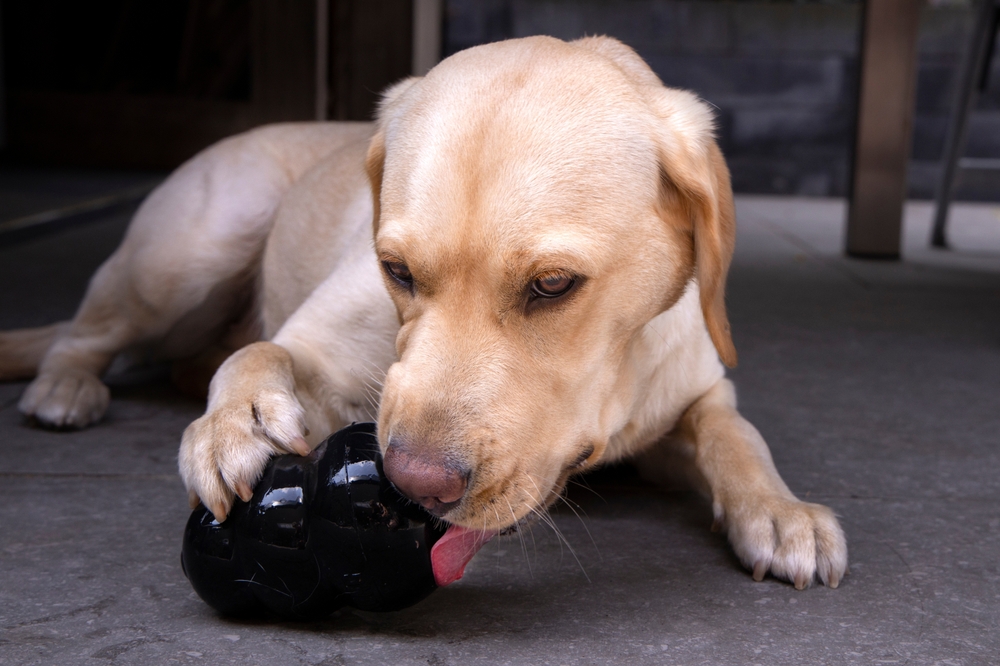
- Food-stuffed rubber toys: a soft, pliable toy packed with food keeps a chewer busy for a long stretch.
- Puzzle feeders: these work the brain instead of the teeth.
- Snuffle mats: hiding kibble in the folds turns dinner into a sniffing hunt.
- Treat-dispensing toys: sized to your dog, they reward gentle effort rather than hard cracking.
Gear Questions We Hear at the Front Desk
Is a bully stick or pig ear safe for my dog?
Bully sticks are softer than bones or antlers and pass the thumbnail test, so they’re gentler on teeth, but they still carry a choking risk, and they add real calories. Pig ears are greasier and have been linked to stomach upset. With either one, pick a size too big to swallow whole, supervise the whole time, and take it away once it shrinks to a piece that could go down whole.
What should I do if my dog swallowed part of a toy?
Call us right away during our open hours so we can decide whether it’ll pass or needs to come out. After hours, reach the nearest veterinary emergency hospital. Do not wait for symptoms, since a blockage can take a day or more to show up as vomiting, a tender belly, or a dog who goes off food. If you still have the packaging or a matching toy, bring it so we can gauge the size and material of what went down.
Can my puppy use the same collar and toys as an adult dog?
Puppies chew even more indiscriminately than adults, especially while teething, so they need extra-durable, correctly sized gear and close supervision. A collar should fit with two fingers of room and be checked often, because a puppy outgrows gear fast and a collar left on too long can dig in. Size toys to your puppy’s current mouth, not the adult they’re growing into.
Sorting the Keep Pile Together in Providence
Sorting your dog’s keep pile comes down to picks that protect the teeth and gut, support the behavior you want, and head off the costly trouble a well-meant purchase can cause. Your dog’s size, chewing style, and history shape what belongs in each pile, and our Care Plans turn the routine visits where we sort all of that out into predictable monthly payments.
If something on the leash hook has you second-guessing, or you’ve already spotted a chipped tooth or a missing toy piece, get in touch with our Providence team and we’ll take a look together.




Leave A Comment